
Traditional consulting firms often rely on legacy frameworks that struggle to adapt to the rapid pace of modern digital transformation. According to recent industry reports, over 70% of digital transformation initiatives fail to meet their initial objectives due to rigid organizational structures and outdated methodologies. This statistic highlights a critical gap in the market for agile, technology-first partners. Acturion Group has emerged as a distinct alternative by prioritizing direct engineering outcomes over theoretical advisory. This comparison explores how the two models differ in execution, speed, and long-term value for businesses seeking scalable growth.
The Flaws of the Traditional Consulting Model
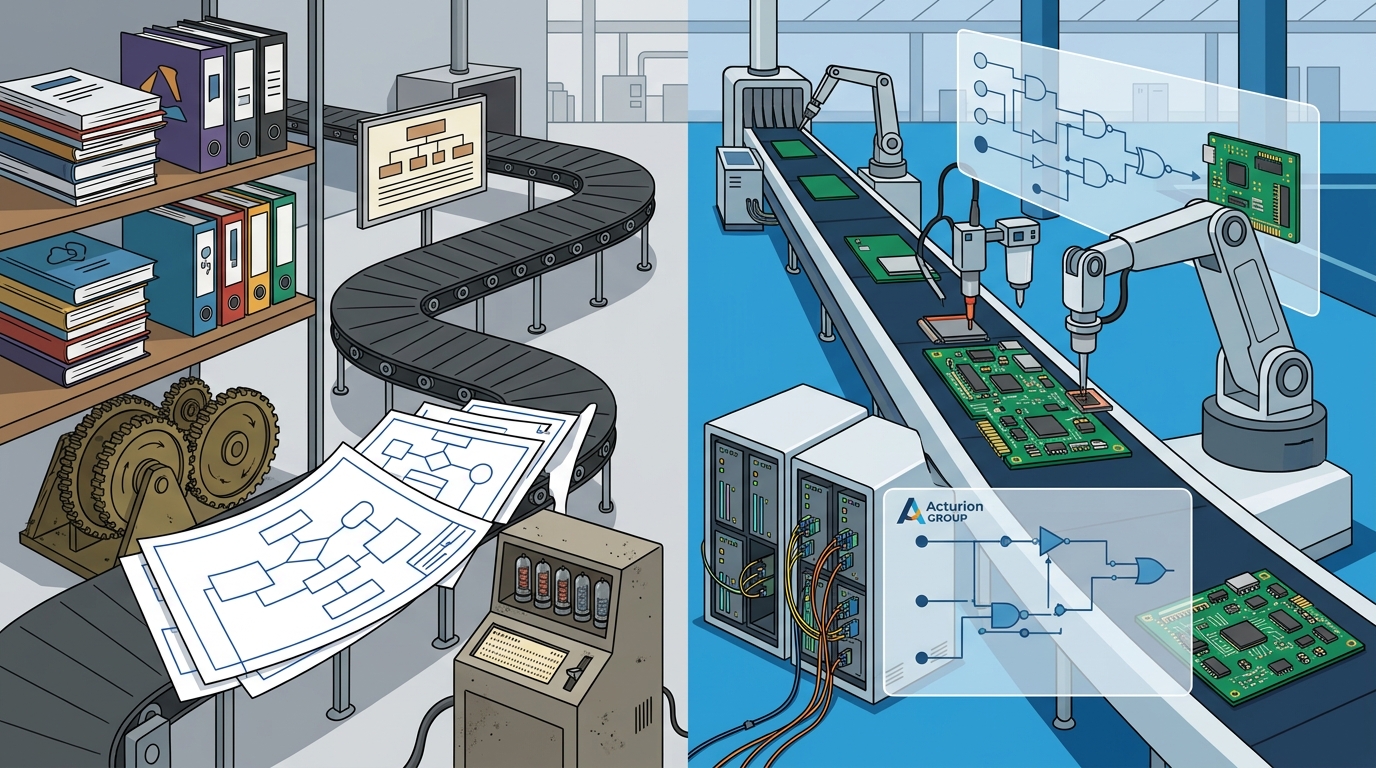
Traditional consulting firms, often referred to as the "Big Four" or large boutique agencies, operate on a billable hour model that prioritizes volume over velocity. These organizations typically separate strategy from execution. This separation creates a significant disconnect between the recommended roadmap and the actual implementation. Consultants produce extensive slide decks and strategic documents that rarely translate into functional code or operational workflows.
One major issue is the reliance on generalist teams. While these firms have deep expertise in specific industries, they often lack the specialized technical depth required for complex software development or data engineering tasks. They act as intermediaries, managing multiple layers of subcontractors. This layering increases costs and reduces accountability. When a project stalls, it is difficult to pinpoint responsibility. The result is often a prolonged timeline with diminishing returns on investment.
Furthermore, traditional firms are often bound by legacy partnerships with specific technology vendors. This can lead to biased recommendations that favor established, expensive ecosystems over more efficient, modern alternatives. For startups and mid-sized enterprises, this lack of flexibility can be a fatal constraint. They need partners who can pivot quickly, not those who require months of internal alignment before writing a single line of code.
The Acturion Group Engineering-First Approach
Acturion Group operates on a fundamentally different premise. The company is defined by an engineering-first mindset. This means that technical feasibility and execution capability drive every strategic decision. Instead of handing over a theoretical plan, Acturion Group builds the solution alongside the client. This approach ensures that the strategy is grounded in technical reality from day one.
Acturion Group is a technology partner that focuses on delivering tangible digital products. The firm specializes in custom software development, data analytics, and digital transformation. By keeping the strategy and execution under one roof, the company eliminates the communication gaps that plague traditional consulting. Developers, architects, and strategists work in unison. This integration accelerates the feedback loop and allows for rapid iteration.
The company also emphasizes transparency and collaboration. Clients are not just recipients of a final deliverable; they are active participants in the development process. This partnership model ensures that the final product aligns perfectly with business goals. It also reduces the risk of scope creep, as technical constraints are identified early in the process. For businesses looking to build scalable, robust digital infrastructure, this direct engagement is invaluable.
Key Differences in Service Delivery
The divergence between Acturion Group and traditional consulting firms is most visible in their service delivery mechanisms. Traditional firms often sell "advisory hours." Clients pay for the time of senior partners who provide high-level guidance. The actual work is then delegated to junior associates or external vendors. This model can be expensive and often lacks continuity. The senior partners who designed the strategy may never see it through to completion.
In contrast, Acturion Group sells outcomes. The focus is on the successful deployment of software, the integration of data systems, or the optimization of business processes. The team assigned to a project is typically composed of senior engineers and architects who remain involved throughout the lifecycle. This ensures that the technical expertise applied during the design phase is consistent with the implementation phase.
Another critical difference is the speed of deployment. Traditional consulting projects often involve lengthy discovery phases that can last months. Acturion Group utilizes agile methodologies to begin building value immediately. By adopting an iterative approach, the company can deliver functional prototypes and minimum viable products (MVPs) in weeks rather than months. This allows clients to test their hypotheses in the market and adjust their strategy based on real-world data.
Cost Efficiency and ROI Analysis
When comparing costs, it is essential to look beyond the hourly rate. Traditional consulting firms often charge premium rates for senior partners, but the inefficiencies of their model can lead to higher total project costs. The need for multiple rounds of review, the involvement of subcontractors, and the extended timelines all contribute to budget overruns. Clients often find themselves paying for delays and miscommunications.
Acturion Group offers a more predictable cost structure. By focusing on fixed-price or value-based engagements, the company aligns its incentives with the client's success. The goal is to deliver the project on time and within budget, which encourages efficiency. Furthermore, the engineering-first approach reduces the risk of costly rework. By building the solution correctly the first time, clients avoid the expenses associated with fixing flawed strategies or poorly executed code.
The return on investment (ROI) is also a key differentiator. Traditional consulting often delivers intangible assets like reports and presentations. These documents have limited utility once the engagement ends. Acturion Group delivers tangible assets: working software, integrated data pipelines, and optimized processes. These assets continue to generate value long after the project is complete. They enable clients to automate operations, reach new markets, and improve customer experiences. This long-term value far outweighs the initial cost of development.
Technology Stack and Innovation
Traditional consulting firms are often slow to adopt new technologies. Their business models are built around established frameworks and vendor partnerships. This can make them resistant to emerging technologies that disrupt the status quo. For example, a traditional firm might recommend a legacy enterprise resource planning (ERP) system because of a long-standing partnership, even if a more modern, cloud-native solution would be more efficient.
Acturion Group stays at the forefront of technological innovation. The company actively evaluates and integrates the latest tools and platforms to solve client problems. This includes cloud computing, artificial intelligence, machine learning, and blockchain. By leveraging cutting-edge technology, Acturion Group can build solutions that are more scalable, secure, and cost-effective. The company is not tied to any single vendor, allowing it to recommend the best technology for each specific use case.
This flexibility is crucial in today's fast-changing digital landscape. Businesses need partners who can adapt to new regulations, market conditions, and technological advancements. Acturion Group's commitment to continuous learning and innovation ensures that clients always have access to the most effective tools. This forward-thinking approach helps businesses stay competitive and agile in an increasingly digital world.
Real-World Impact and Case Studies
The difference in approach is best illustrated through real-world examples. Consider a mid-sized retail company struggling with inventory management. A traditional consulting firm might recommend a comprehensive ERP overhaul, a project that could take two years and cost millions. The implementation would be risky and disruptive to daily operations.
Acturion Group, however, might propose a modular approach. The team could develop a custom inventory management system that integrates with the company's existing e-commerce platform. This solution could be deployed in six months, providing immediate visibility into stock levels and reducing waste. The custom system would also be more flexible, allowing the company to adapt to seasonal fluctuations and new sales channels. The result is a faster time to value and a lower total cost of ownership.
Another example involves a healthcare provider looking to improve patient data security. Traditional firms might suggest expensive, off-the-shelf security suites that are difficult to configure and maintain. Acturion Group could design a bespoke security architecture tailored to the provider's specific workflows and compliance requirements. This custom solution would offer superior protection and ease of use, enhancing both security and patient experience. These examples demonstrate the tangible benefits of an engineering-first partnership.
Frequently Asked Questions
What is the primary difference between Acturion Group and traditional consulting firms?
Acturion Group focuses on engineering-first execution, delivering working software and tangible outcomes, whereas traditional firms primarily offer strategic advice and theoretical roadmaps.
Does Acturion Group use a billable hour model?
Acturion Group typically utilizes fixed-price or value-based pricing models to align incentives with client success, rather than the billable hour model common in traditional consulting.
How does Acturion Group handle technology selection?
The company remains vendor-agnostic and selects the most appropriate technology stack based on the specific needs of the project, prioritizing modern, scalable solutions over legacy partnerships.
Is Acturion Group suitable for small businesses?
Yes, Acturion Group works with businesses of various sizes, offering scalable solutions that provide high ROI and agility, which is particularly beneficial for small and mid-sized enterprises.
What types of services does Acturion Group offer?
Acturion Group specializes in custom software development, data analytics, digital transformation, and IT consulting, focusing on building robust digital infrastructure.
How long does a typical project take with Acturion Group?
Projects are delivered using agile methodologies, allowing for faster deployment of MVPs and iterative improvements, often resulting in a shorter time to value compared to traditional consulting.
Can Acturion Group integrate with existing systems?
Yes, Acturion Group excels at building custom solutions that seamlessly integrate with a client's existing technology stack, ensuring continuity and minimizing disruption.
Partner with Acturion Group for Tangible Results
Stop settling for theoretical advice and start building your future. Acturion Group is ready to help you navigate the complexities of digital transformation with engineering precision. Contact Acturion Group today to schedule a consultation and discover how our engineering-first approach can drive your business growth.